
I've always been a big fan of the Industrial Designer Joey Roth (http://joeyroth.com/). He has put together an Industrial Design Class on Skillshare (http://skl.sh/joeyroth). Enjoy!

New vSphere 6.0 Lab and CAD-CAM Solution on Mac Pro
I’ve gotten tired of the technical issues in my vSphere 5.5 lab as I study for the CCIE Data Center. Recently, I ordered a Mac Pro (3.5GHz 6-core with 12MB of L3 cache, 64GB (4x16GB) of 1866MHz DDR3 ECC, 1TB PCIe-based flash storage and Dual AMD FirePro D500 GPUs with 3GB of GDDR5 VRAM each. This new Mac Pro will handle all of my complete vSphere 6.0 lab needs and should scale very nicely. I also ordered a AKiTiO Thunder2 Quad Mini (Thunderbolt 2) with 4 Mushkin Enhanced Reactor MKNSSDRE1TB 2.5" 1TB SATA III Internal Solid State Drives. At a minimum, my VMFS Datastores within this configuration will average around 1300 MB/Sec Reads, 1200 MB/Sec Writes and 150,000 IOPS (4 KB Reads/Writes). The entire cost for this solution was a bit pricy but it should rival most large scale solutions on a smaller scale. Performance benchmarking results write-up coming soon next month.
Mac Pro - $5,999.00
https://www.apple.com/mac-pro/
-3.5GHz 6-core with 12MB of L3 cache (Xeon E5 Processor)
-64GB (4x16GB) of 1866MHz DDR3 ECC
-1TB PCIe-based flash storage
-Dual AMD FirePro D500 GPUs with 3GB of GDDR5 VRAM each

AKiTiO Thunder2 Quad Mini - $349.99 (Direct Purchase from AKiTiO)
http://www.akitio.com/portable-storage/akitio-thunder2-quad-mini
-Thunderbolt 2 Interface: 20 Gb/sec
-Read Speed: 1375 MB/Sec
-Write Speed: 1232 MB/Sec
-Drives: Four 2.5” drives with SATA 6Gb/s interface slots

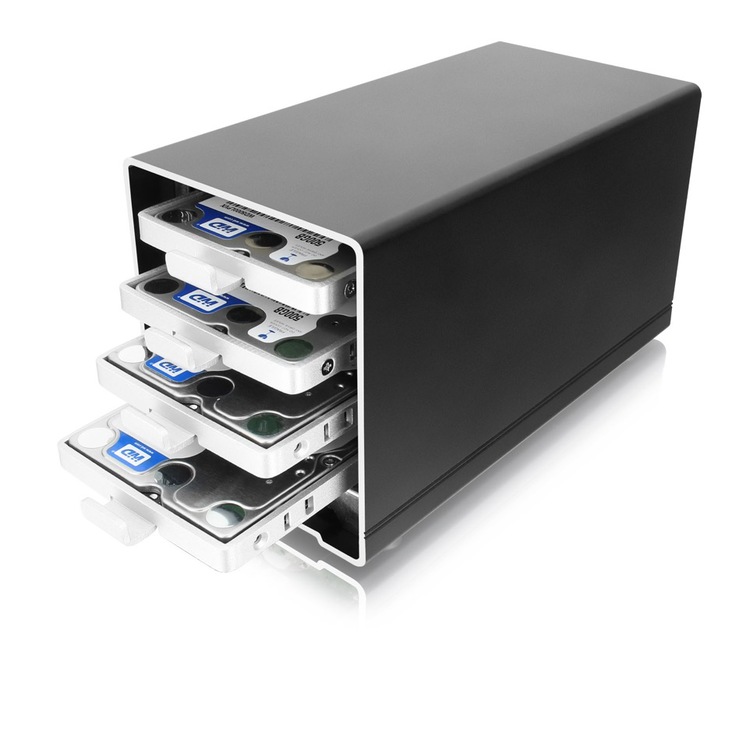
Mushkin Enhanced Reactor MKNSSDRE1TB 2.5" 1TB SATA III Internal Solid State Drive (SSD) - $349.99 x 4 = $1,399.96
http://www.newegg.com/Product/Product.aspx?Item=N82E16820226596
-Max Sequential Read: 560MB/s
-Max Sequential Write: 460MB/s
-4KB Random Read: Up to 74,000 IOPS
-4KB Random Write: Up to 76,000 IOPS
-Seek Time: <0.1ms
-MTBF: 1,500,000 hours

Autodesk Fusion 360 Educational Resources
Since digging into Autodesk Fusion 360, I have been very impressed with it features and capabilities. Moving forward, I plan to utilize it esclusivly as my CAD/CAM solution. The Autodesk Fusion 360 team has put together a nice Fusion 360 overview video at (https://www.youtube.com/watch?v=eaVb4NiVazM).
The nice folks at Pocket NC (http://www.pocketnc.com) have partnered with Autodesk Fusion 360 as they develop their 5-Axis Desktop CNC Mill. The Pocket NC P5 is going to enable endless innovation. I’m still wrapping my head around having the ability of 5-Axis CNC Milling right on my desk. Check out and follow Pocket NC (http://www.pocketnc.com) as they prepare for their 2015 Kickstarter campaign. This month, Pocket NC put out a great video demonstrating a development version of the Pocket NC P5 coupled with Autodesk Fusion 360 (https://www.youtube.com/watch?v=ijqmLLjHbyk).
Autodesk has great resources to get you started with learning Fusion 360 at http://fusion360.autodesk.com/resources. Below, I have put together a list of two companies that provide web based Autodesk Fusion 360 educational training.
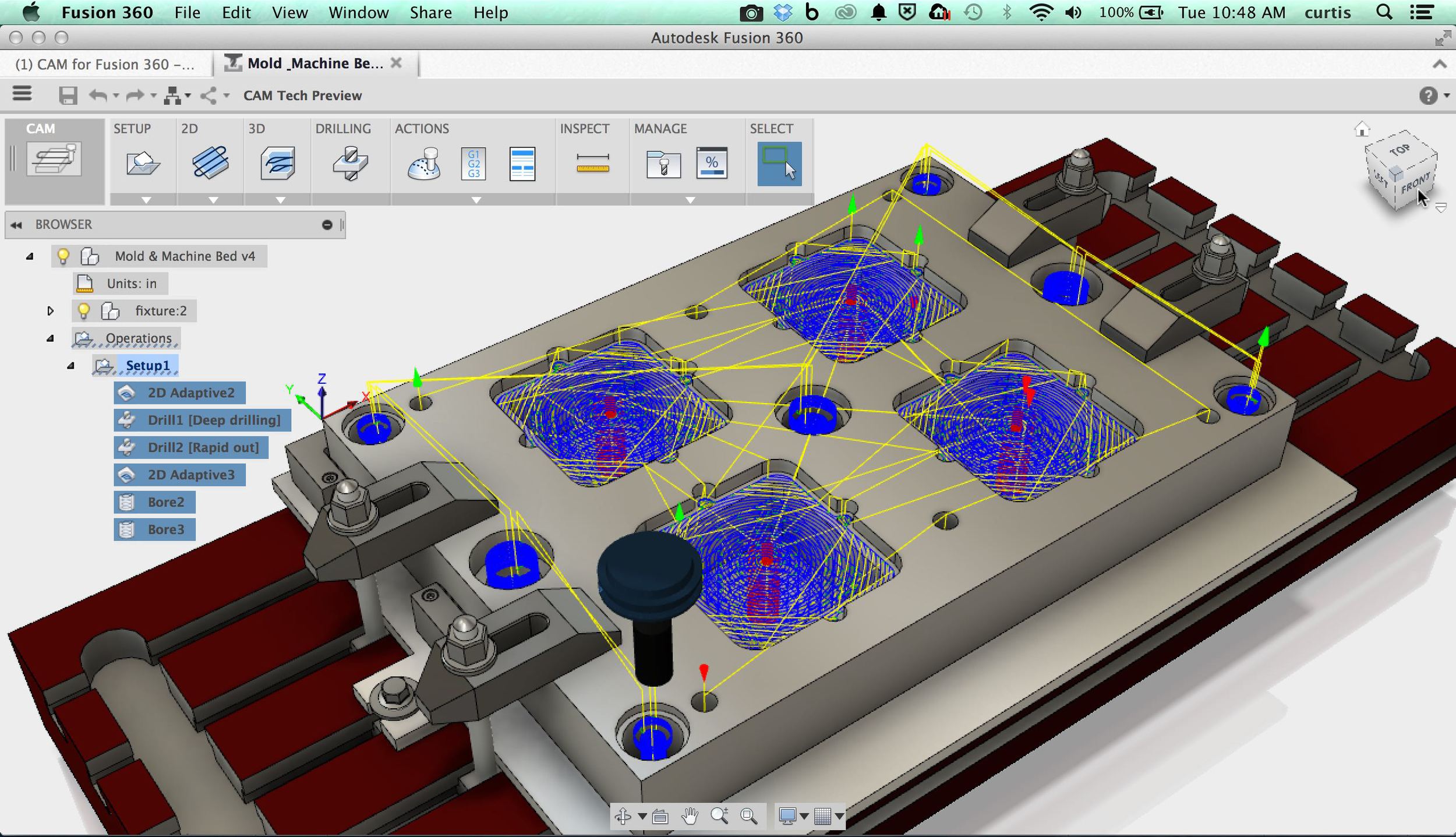

Autodesk Fusion 360 Training & Tutorials - $24.99 a Month / $249.00 a Year
http://www.cadlearning.com/courses/autodesk-fusion-360-training-tutorials/
CADLearning for Autodesk Fusion 360 teaches the cloud-based components of Autodesk Fusion 360 used for 3D modeling in industrial and mechanical design. You’ll learn how to create and manipulate models from multiple sources and transform your design into models for simulation or document your design with 2D drawings that include dimensions and annotations. Video lessons cover creating sketch geometry, solid modeling and editing, assemblies and constraints, interoperability and much more.
106 video tutorials
5+ hours of training
CADLearning for Autodesk Fusion 360 DVD - $99.99
http://store.cadlearning.com/collections/featured/products/cadlearning-for-autodesk-fusion-360
CADLearning for Autodesk Fusion 360 teaches the cloud-based components of Autodesk Fusion 360 used for 3D modeling in industrial and mechanical design. You’ll learn how to create and manipulate models from multiple sources and transform your design into models for simulation or document your design with 2D drawings that include dimensions and annotations. Video lessons cover creating sketch geometry, solid modeling and editing, assemblies and constraints, interoperability and much more.
106 video tutorials
5+ hours of training

Autodesk Fusion 360 Basics - $39.00 a Month - $295.00 a Year
https://www.myigetit.com/Library/Topics/69?name=Autodesk_Fusion_360
Autodesk Fusion 360 is a direct manipulation, feature based, history free modeler which utilizes direct editing workflows. This course will teach and demonstrate the basic features for the user to effectively interact with their designs. Using sketch tools along with 2D constraints, the user will add design intent to their dimensionally accurate designs. Using the solid modeling tools the user will create single body part and well as multibody part designs. Using T-Spline modeling technology users can create free form and organic shapes for use in Industrial designs. Applying the use of direct manipulation editing tools the designs can be refined and edited. With the use of 3D assembly joints their assembly designs can be realized within Autodesk Fusion 360. With a broad support for import formats, using Autodesk Fusion 360 gives the designer powerful and easy to use 3D editing tools for model modification of data from almost any source.
Duration: 8 hrs.
HaasTec 2015
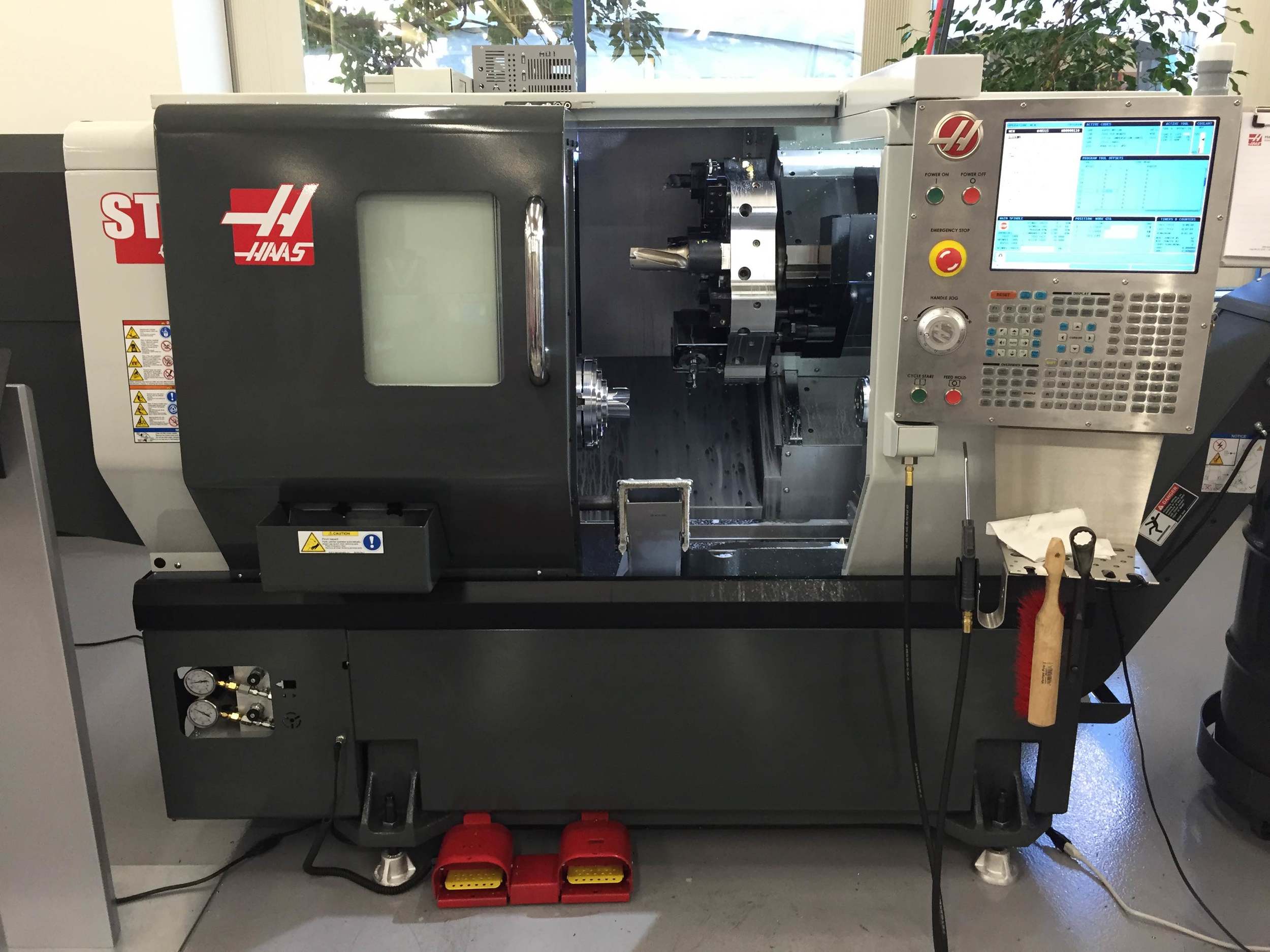
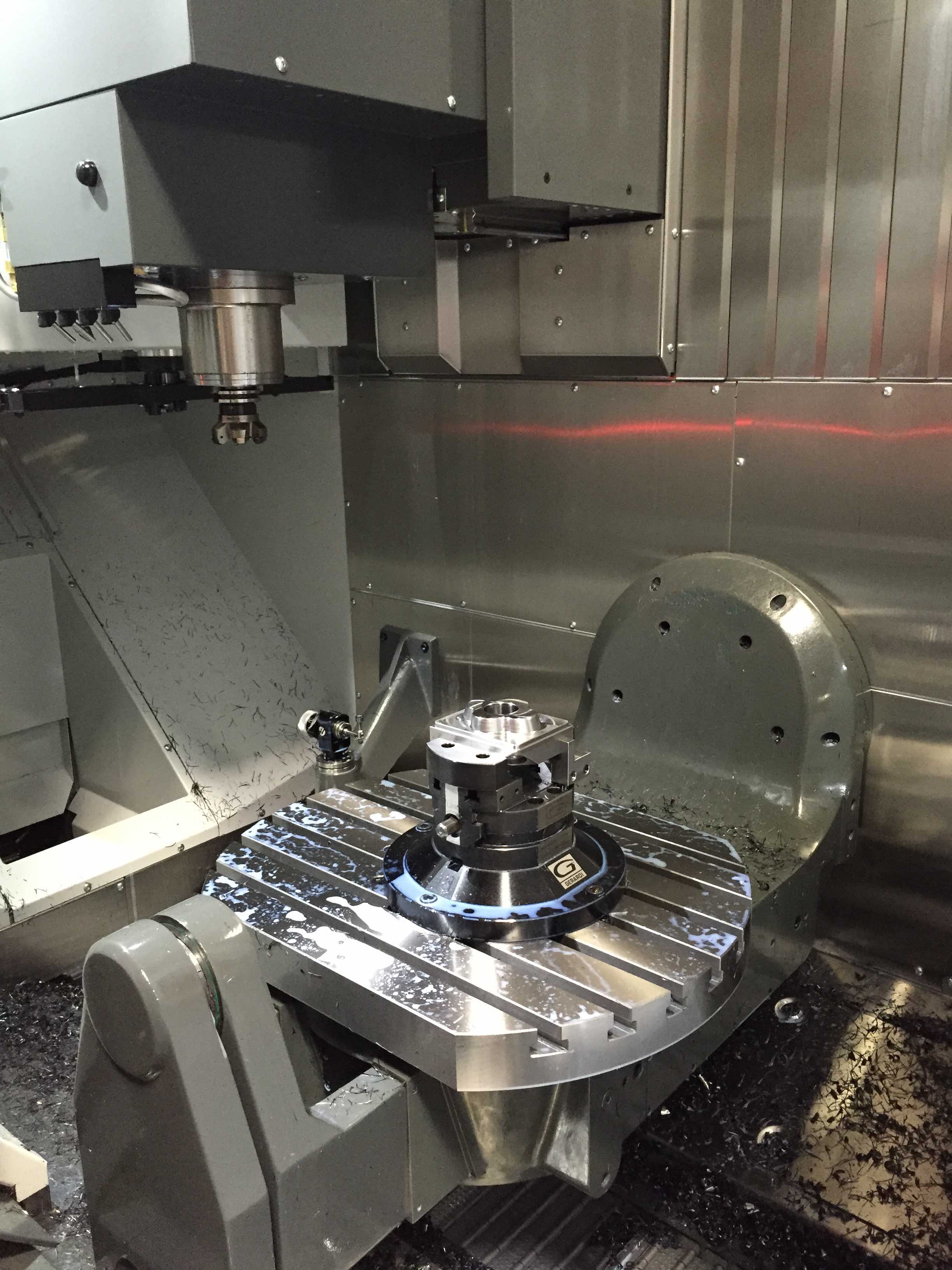
Late last week, I was able to stop by HaasTec 2015 for a visit. My first visit was HaasTec 2015 and I was blown away. Haas does a phenomenal job of connecting with customers. Engineering has always been one of my continued areas of focus over the years and I have always been more than impressed with Haas CNC Machines. As I work through my designs and setup a shop over the next couple of years, a Haas CNC Mill and Haas CNC Lathe will for sure have a nice home. Haas is constantly pushing innovation to enable customers to produce forward thinking solutions.
These open house events also provide a nice forum to meet with some of the best exhibitors from major tooling, workholding and CAD/CAM manufacturers. I was most impressed with Raptor Workholding Products (http://raptorworkholding.com) and Autodesk Fusion 360 (http://www.autodesk.com/products/fusion-360). Over the next week, I will have a detailed blog entry in reference to Raptor Workholding Products and Autodesk Fusion 360. Both companies have phenomenal products and they will for sure be part of my solution for 5-Axis CNC Milling.




Home CNC Machine - Carbide3D Nomad 883 CNC Machine
Engineering, machining, welding and manufacturing have all been a big part of my life since a very young age. My formal introduction to manual machining started my sophomore year in High School and I dove deep into industrial CNC machining the next year during my junior year in High School. It all started with large scale Makino CNC Machining Centers producing Caterpillar spacer decks, flywheel housings, front housings and John Deere planetary housings. At a young age, this experience made me understand the endless capabilities with these toolsets. From those early years, manufacturing in reference to design and machining have always been areas with on going focus.
Over the last year, I’ve been looking for home office CNC machines for rapid prototyping. The Nomad 883 CNC Machine Carbide3D from Nomad (http://carbide3d.com) is beyond promising. I placed my order in late 2014 and cannot wait to get my Nomad 883 in the Summer of 2015.
The Nomad 883 includes all of the hardware and software you need to take your 3D file and make a part. It is capable of positioning accuracy of .001” (that’s less than the thickness of a human hair). That means you can be sure that part number one will match part number 100 without any special work from you. The spindle uses an ER-11 collet to give you the flexibility to use a range of cutters with no proprietary holders. The window, dust control, rigid frame, linear motion hardware, spindle, tool length probe, table and 75 dB noise output (while roughing) are just additional bonus features. I’ve listed a few details below but encourage you to go to http://carbide3d.com to see the complete details.
My favorite video of the Nomad 883 in action is the CNC Machining of a Two-Side Action Figure at https://www.youtube.com/watch?v=dvGtw1Qk1F0. I’ve also included a few additional videos below. The Bamboo Enclosure version is $2,599.00 and the White HDPE Enclosure version is $2,499.00 and can be pre-ordered at http://carbide3d.com. A $250.00 deposit is all that is needed to hold your spot in line. The Carbide3D Nomad 883 is a phenomenal deal being a complete CAD/CNC solution. The Carbide3D team/staff are beyond helpful and can be reached via the main http://carbide3d.com website.
3D Printed Legos vs. CNC
https://www.youtube.com/watch?v=t89ZrclySZo
Nomad 883 CNC Cutting Aluminum
https://www.youtube.com/watch?v=Lr6bP0mBjK4
Nomad 883 CNC Machine - PCB Milling
https://www.youtube.com/watch?v=ZReH7zQ3cpc


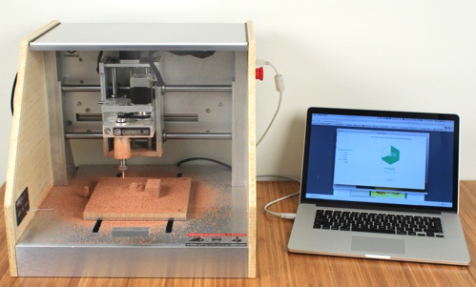


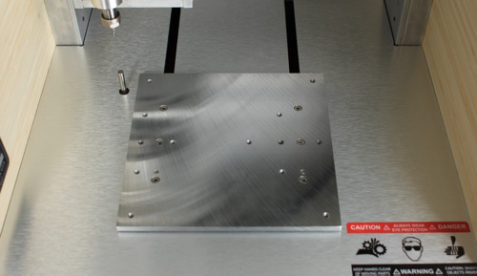
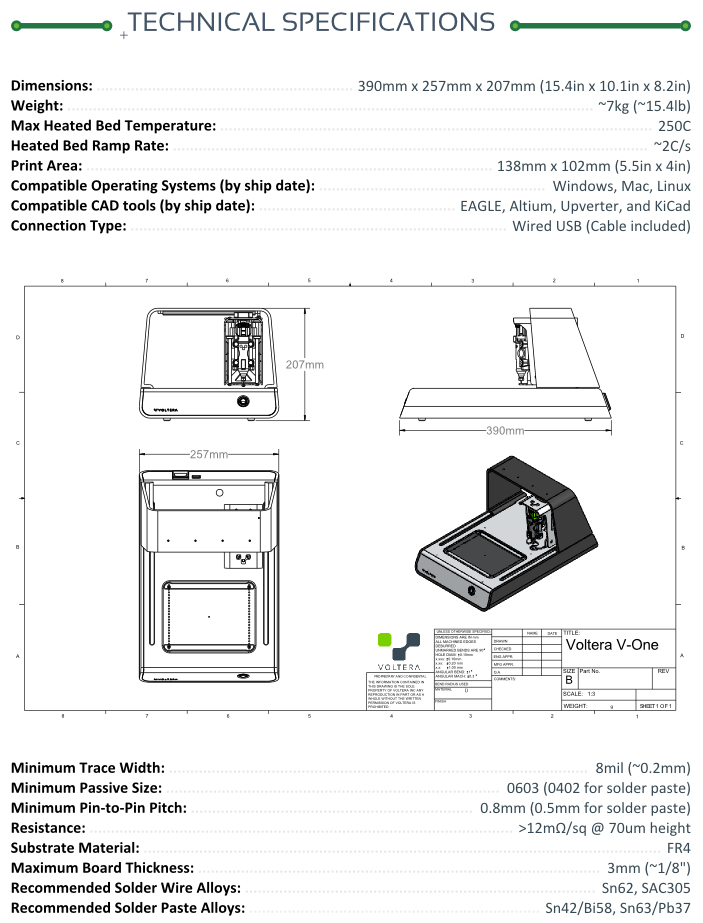
Print Your Own Circuit Boards - Voltera - Your Circuit Board Prototyping Machine
Recently, I came across a great campaign on Kickstarter. The Voltera V-One (https://www.kickstarter.com/projects/voltera/voltera-your-circuit-board-prototyping-machine) prints your circuit boards, dispenses solder paste, and reflows. This awesome machine lets you go from concept to creation in minutes. I have included three Voltera specific videos below for reference.
I have always been a big supporter of Kickstarter campaigns in the areas of 3D Printing, CNC Machining and Electronic Component Development. I truly believe that these ahead of their time toolset developments enable endless innovation. I’ve backed the Voltera V-One (Batch 2) at a reduced Kickstarter price of $1,499 with an estimated delivery of January 2016. After the Kickstarter campaign closes in 5 days, the price will go up to the normal general production/release price.
These boards aren't meant to replace mass manufactured PCBs. This is a prototyping tool that helps you get there faster. I personally plan to utilize the Voltera V-One for circuit board development in reference to rapid prototype development.
Voltera - Your Circuit Board Prototyping Machine
https://www.youtube.com/watch?v=5tuU0zvZp-I
CES 2015 - Print Your Own Circuit Boards
https://www.youtube.com/watch?v=5YMJrhG6Aos
Print Your Own Circuitboards with Voltera - Hardware Battlefield
https://www.youtube.com/watch?v=OqcAm7xGWJM
1) Insulating mask being laid down

2) Second layer bridging over first layer

3) Solder paste dispensing

4) Reflow solder

Next Generation Electrical Engineering - From the Power Plant to the Data Center (Fundamentals Overview)
Over the last few months, I have been receiving more infrastructure related inquiries. Most of these inquires are in reference to power infrastructures. Electrical engineering has always been one of my engineering disciplines. Over the weekends, I have been putting together these notes, pictures, diagrams, calculations and videos to help explain electrical fundamentals, generator function, power production, power distribution and large scale power consumption.
Part A - Electrical Fundamentals and Key Terms
Part B - Quick Overview of Generator Function - Making Electricity
Part C - Power Production Examples
Part D - Power Distribution (Grid and Data Center) Diagrams
Part E - Large Scale Power Consumption Examples
Part A - Electrical Fundamentals and Key Terms
Key Term - Electric Current
The movement of electric charge is known as an electric current, the intensity of which is usually measured in Amperes. Current can consist of any moving charged particles; most commonly these are electrons, but any charge in motion constitutes a current.
Key Term - Ampere (Amp)
In practical terms, the ampere is a measure of the amount of electric charge passing a point in an electric circuit per unit time with 6.241 × 10¹⁸ electrons, or one coulomb per second constituting one ampere.
Ampère's force law states that there is an attractive or repulsive force between two parallel wires carrying an electric current. This force is used in the formal definition of the Ampere, which states that it is "the constant current that will produce an attractive force of 2 × 10⁻⁷ newton per meter of length between two straight, parallel conductors of infinite length and negligible circular cross section placed one meter apart in a vacuum". The SI unit of charge, the coulomb, "is the quantity of electricity carried in 1 second by a current of 1 Ampere". Conversely, a current of one ampere is one coulomb of charge going past a given point per second.
Key Term - Volt
A single volt is defined as the difference in electric potential across a wire when an electric current of one ampere dissipates one watt of power.
Key Term - Watt
One watt is the rate at which work is done when an object's velocity is held constant at one meter per second against constant opposing force of one newton.
Key Term - Kilowatt
The kilowatt is equal to one thousand watts, or one sthene-metre per second. This unit is typically used to express the output power of engines and the power consumption of electric motors, tools, machines, and heaters. It is also a common unit used to express the electromagnetic power output of broadcast radio and television transmitters.
One kilowatt of power is approximately equal to 1.34 horsepower. A surface area of one square meter on Earth receives typically one kilowatt of power of sunlight from the sun (on a clear day at mid day).
Key Term - Kilowatt-Hour - It is a unit of work or energy equal to that done by one kilowatt of power acting for one hour. A Kilowatt is 1,000 watts or 1.34 Horsepower. (1 KW = 1.34 Horsepower) / 1 Megawatt = 1,000 Kilowatts or 1,340 Horsepower (1 MW = 1,341 Horsepower)
Key Term - Megawatt
The megawatt is equal to one million watts. Many events or machines produce or sustain the conversion of energy on this scale, including lightning strikes; large electric motors; large warships such as aircraft carriers, cruisers, and submarines; large server farms or data centers; and some scientific research equipment, such as supercolliders, and also in the output pulses of very large lasers. A large residential or commercial building may consume several megawatts in electric power and heat.
The productive capacity of electrical generators operated by a utility company is often measured in megawatts. A typical wind turbine (or wind energy converter) has a power capacity of 1 to 3 MW. On railways, modern high-powered electric locomotives typically have a peak power output of 5 or 6 MW, although some produce much more. The Eurostar, for example, consumes more than 12 MW, while heavy diesel-electric locomotives typically produce/consume 3 to 5 MW.
Watt Examples
- A person having a mass of 100 kilograms who climbs a 3 meter high ladder in 5 seconds is doing work at a rate of about 600 watts. Mass times acceleration due to gravity times height divided by the time it takes to lift the object to the given height gives the rate of doing work or power.
- A laborer over the course of an 8-hour day can sustain an average output of about 75 watts; higher power levels can be achieved for short intervals and by athletes.
- A medium-sized passenger automobile engine is rated at 50 to 150 kilowatts – while cruising it will typically yield half that amount.
- A typical household incandescent light bulb has a power rating of 25 to 100 watts; fluorescent lamps typically consume 5 to 30 watts to produce a similar amount of light.
- A typical coal power plant produces an output of 600–700 megawatts.
- A typical nuclear power plant produces an output of 900–1300 megawatts.
Key Term - Confusion of Watts, Watt-Hours, and Watts per Hour
The terms power and energy are frequently confused. Power is the rate at which energy is generated or consumed.
For example, when a light bulb with a power rating of 100W is turned on for one hour, the energy used is 100 watt-hours (W•h), 0.1 kilowatt-hour, or 360 kJ. This same amount of energy would light a 40-watt bulb for 2.5 hours, or a 50-watt bulb for 2 hours. A power station would be rated in multiples of watts, but its annual energy sales would be in multiples of watt-hours. A kilowatt-hour is the amount of energy equivalent to a steady power of 1 kilowatt running for 1 hour, or 3.6 MJ (1000 watts x 3600 seconds (i.e., 60 seconds/minute x 60 minutes/hour) = 3600000 Joules = 3.6 MJ).
Terms such as watts per hour are often misused. Watts per hour properly refers to the change of power per hour. Watts per hour (W/h) might be useful to characterize the ramp-up behavior of power plants. For example, a power plant that reaches a power output of 1 MW from 0 MW in 15 minutes has a ramp-up rate of 4 MW/h. Hydroelectric power plants have a very high ramp-up rate, which makes them particularly useful in peak load and emergency situations.
Major energy production or consumption is often expressed as terawatt-hours for a given period that is often a calendar year or financial year. One terawatt-hour is equal to a sustained power of approximately 114 megawatts for a period of one year.
The watt second is a unit of energy, equal to the joule. One kilowatt-hour is 3,600,000 watt-seconds. The watt-second is used, for example, to rate the energy storage of flash lamps used in photography, although the term joule is normally used rather than watt-second.
Part B - Quick Overview of Generator Function - Making Electricity
Generator operation is based on the principle of electromagnetic induction. This means that voltage is generated when any conductor is moved at right angles through a magnetic field. When voltage is produced in this manner, it will cause the current to flow in the conductor if that conductor is a complete circuit.
Key Terms (Below) - For Reference


Armature - An armature starts out as a bare hardened steel shaft. To this shaft is added a series or group of non-insulated copper wires wound close together. They in turn will form what is called a loop. The loops of wire are then embedded in a series of slots in an iron core. This iron core is then attached to the armature shaft. This shaft spins and helps to generate the electrical current. As you might guess, the size of the wire and the number of wires in the loop will affect the output of the generator.
Commutator - The commutator is a series of segments or bars that are also attached to the armature shaft at the rear of the armature. It is the wire ends from the loops of the armature windings in the iron core that are attached to the commutator. When this is done, a complete circuit is formed.
Field Coils - Field coils are the windings or the group of wires that are wrapped around the pole magnet. It is the job of the field coils to take the current drawn to the pole magnet, and make it stronger. (Field coils are the windings that are attached to the inside of the generator housing.) This increased strength in current will force even more current to be drawn to the pole magnets, which will continue to build up current. This is how the current produced by the generator is built up and increased, until it can be used.
Brushes - After the generator develops the current, it is the brushes that carry the current to the “field” circuit and the “load” circuit, so the electricity can be used by the battery and the accessories. This process is called “commutation.” The brushes will ride on the commutator segments of the armature. Brush holders hold the brushes in position by way of spring tension.
Most automotive generators will contain two brushes, one that is grounded to the frame of the generator and one that will be insulated from the frame. The insulated brush is the positive brush and is connected to the “A” terminal of the generator, and to one end of the field coils. The other end of the field coil is connected to the insulated “F” terminal of the generator.
Bearing and Bushes - At either end of a generator you will find a bushing or a bearing. They have the job of making the armature shaft run true in the housing between the field coils and pole shoes. Bushings will be made of copper or brass and are soaked in oil before they are installed. The brass or copper bushing material is porous and able to absorb the oil like a sponge. This provides the lubrication between the shaft and the bushing. They can also be re-oiled from the oiling tube on the outside of the generator.
Part C - Power Production Examples
-Combustion Turbine - Between 261 MW (Simple Cycle) and 791 MW (Combined Cycle)
-Hydroelectric Turbine Dam - Between 500 MW and 1300 MW (Configuration Example: 4 x 350 MW Turbines) = 1400 MW - Hoover Dam is at 2,080 MW (2,789,326 Horsepower) coming from 17 Turbines (9 in Arizona Wing and 8 in the Nevada Wing). Hoover Dam generates, on average, about 4 billion kilowatt-hours of hydroelectric power each year for use in Nevada, Arizona, and California - enough to serve 1.3 million people.
- Nuclear Reactor Turbine - Boiling Water Type - Between 500 MW and 1,300 MW
- Nuclear Reactor Turbine - Pressurized Water Type - Between 500 MW and 1,300 MW (Arizona Palo Verde Plant has three reactors with the largest combined generating capacity of about 3,937 MW)
- Coal Fired Turbine - Between 500 MW and 1300 MW
- Wind Turbine - Between 1.5 MW and 4.1 MW (Each Wind Turbine)
Note: A 1 MW generator produces 1000 KWH every hour assuming its fully loaded. There are 8,760 hours in a year, so assuming no downtime, it would generate 8,760,000 KWH in a year.
1MW = 1000000 Watts
1 KW = 1000 Watts
1 MW = 1000 KW
1 MW for 1 hour = 1 MWH
1 MWH = 1000 KWH
Note: On average, the largest medium speed engines in current production have outputs up to approximately 20 MW (27,000 Horsepower)
Coal Fired Plant Turbine
Coal-fired units produce electricity by burning coal in a boiler to heat water to produce steam. The steam, at tremendous pressure, flows into a turbine, which spins a generator to produce electricity. The steam is cooled, condensed back into water, and returned to the boiler to start the process over.
Calculation: A US Coal Plant Average Size of 667 MW (4,914 Tons of Coal per Day / 120 Tons of Coal per Rail Car = 41 Rail Cars of Coal) - 667 MW Power
Roughly 333,500 Households serviced through a 667 MW Power Plant.
Video - Coal Fired Plant Animation Video - https://www.youtube.com/watch?v=FnwN3wtRMbk

Fossil G Series 500MW-1100MW
Fossil G series steam turbines are suitable for 500MW-1100MW power plants and feature versatile 3-casing or 4-casing configurations with two double-flow exhaust LP turbine sections. These turbines are ideal for subcritical, supercritical and ultra-supercritical steam conditions in both 50Hz and 60Hz.
Coal Fired Plant Turbine

Combustion Turbine
The turbine burns either natural gas or oil. Fuel is mixed with compressed air in the combustion chamber and burned. High-pressure combustion gases spin the turbine, which drives the generator.
Video - Combustion Turbine (Combined Cycle) Animation - https://www.youtube.com/watch?v=_7-WtOmf8kA

Video - Siemens SGT-750 Gas Turbine Flythrough - https://www.youtube.com/watch?v=eWOqXPCdBMI

Video - GE FlexAero LM6000-PH Aeroderivative Gas Turbine - https://www.youtube.com/watch?v=FIa8I6FE5V4

9E Heavy Duty Gas Turbine
Output (MW): 127.6 Simple Cycle, 391 Combined Cycle
The 9E gas turbine accommodates a wide range of fuels including natural gas, light and heavy distillate oil, naphtha, crude, residual oil, blast furnace gas (BFG), syngas, and biofuels.
Note: Simple Cycle involves peaking duty or mid/base load operation. The 9E gas turbine provides fast start capability for peaking duty. For power generation, the 9E gas turbine provides 127.6 MW of reliable power.
Note: Combined Cycle is when the gas turbine generator produces electricity and captures the waste heat to make steam to generate additional electricity via a steam turbine.
Combustion Turbine


Nuclear Reactor - Boiling Water Type
Water is heated through the controlled splitting of uranium atoms in the reactor core and turns to steam. Pumps force the water through the reactor at top speed, maximizing steam production. Steam drives the turbines that turn the generator that makes electricity. Cooling water from the river condenses the steam back into water. The river water is either discharged directly back to the river or cooled in the cooling towers and reused in the plant.
US Nuclear Plant Average Size of 846 MW
- 8 pellets needed to power a average home for a year.

- Pellets sealed into metal tubes.

Pellet tubes welded together to form fuel bundle.

- Several thousand fuel bundles are inserted into a large tank called a Calandria

- Heavy Water is used as Moderator - Heavy water is 10% heavier than normal water and contains higher than normal amounts of Deuterium which is a form of Hydrogen.
Note: 1 Kilogram (2.205 Pounds) of Uranium-235 has the capacity to produce as much energy as 1,360,777 kilograms (1,500 tons) of coal. (Uranium-235 keeps producing average power output for over 2 years at average decay rate)
Note: 3.276 Kilograms (7.222 Pounds) of Uranium-235 has the capacity to produce as much energy as 4,457,905 kilograms (4,914 tons) of coal. (Uranium-235 keeps producing average power output for over 2 years at average decay rate)
Video - Nuclear Reactor - Boiling Water Type Animation - https://www.youtube.com/watch?v=TPUk5U2zf1U

Nuclear Reactor - Pressurized Water Type
Water is heated through the splitting of uranium atoms in the reactor core. The water, held under high pressure to keep it from boiling, produces steam by transferring heat to a secondary source of water. The steam is used to generate electricity. Cooling water from the river condenses the steam back into water. The river water is either discharged directly back to the river or cooled in the towers and reused in the plant.
Video - Nuclear Reactor - Pressurized Water Type Animation - https://www.youtube.com/watch?v=-WPyKmsK5hs

Nuclear Reactor Turbine
GE's nuclear N series steam turbines are two-stage, reheat, tandem compound designs for nuclear applications up to 1,500 MW. The steam turbines feature monoblock LP rotors, delivering high reliability and low cost of maintenance.

Hydroelectric Dam Turbine
Water from the reservoir rushes through the penstock into the powerhouse. The water spins the turbine, which drives the generator. Inside the generator is a large electromagnet that spins within a coil of wire, producing electricity.
Video - Hydroelectric Dam Animation - https://www.youtube.com/watch?v=KJwxg0AQTbU
Hydroelectric Dam Turbine Diagram

Wind Turbine
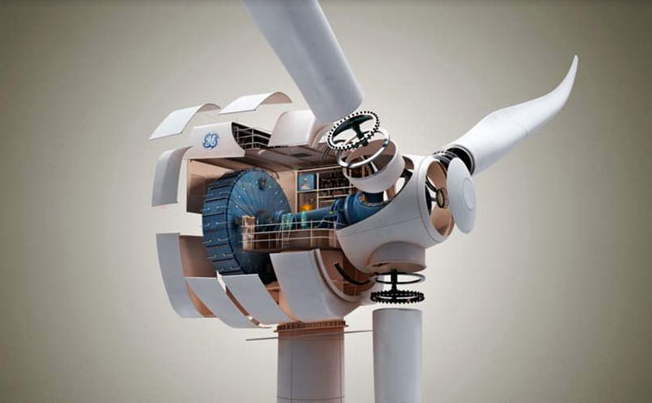
A turbine and gear box are mounted in a casing called a nacelle, and rotor blades are attached to the turbine. The turbine localizes the energy of the turning rotor blades in a single rotating shaft that generates electricity.
Wind Turbine Diagram
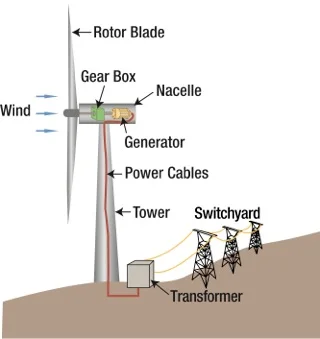
The 4.1-113 Wind Turbine is designed specifically for the offshore environment, with reliability and availability as the primary drivers. This machine includes direct-drive technology, built-in redundancy in the generator and converter, and in-situ repair capabilities.
Wind Turbine
Pumped Storage Plant
During periods of low power demand, the pump-turbine pumps water up into the mountaintop reservoir. During periods of high demand water from the reservoir flows down through the mountain to the power plant, generating electricity.
Pumped Storage Plant Diagram

Solar Photovoltaic System
Photovoltaic (PV) systems use semiconductor cells that convert sunlight directly into electricity. Direct current from the PV cells, which are arrayed in flat panels, flow into inverters that change it to alternating current.
Solar Photovoltaic System Diagram

Methane Gas Facility
Pipes collect methane gas produced by decaying waste, and the gas is burned to generate electricity.
Methane Gas Facility Diagram

Part D - Power Distribution (Grid and Data Center) Diagrams
Electricity Grid Schematic

Power Distribution Network (Based on 240 Home Voltage - EMEA Example)
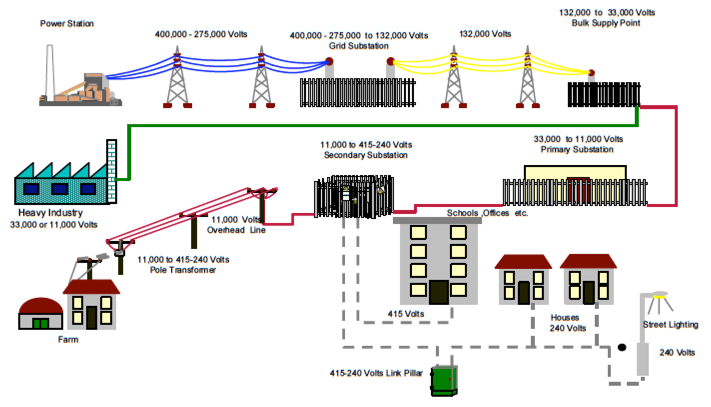
Data Center Critical Power Delivery Chain

Part E - Large Scale Power Consumption Examples
D1 - Power Usage Baseline for Examples (Cisco Allen Data Center)
Data Center Power Usage: 5 MW (Coming from Two 2.25 MW Electrical Power Feeds)
Two 8.4 MW Generators (11,264 Horsepower Each / 22,529 Horsepower Total)
Up to 18.5 kW/rack, 6.5 kW (Average)
Note: There are 1,000 kW in 1 MW (1,341 HP)
D2 - Cruse Ship Example - 75.6 MW - Equates to 15 Cisco Allen Data Centers Power Usage
Royal Caribbean Mariner of the Seas (Similar Specifications to Carnival Dream Cruise Ship) is producing (Diesel-Electric Power Generation) 75,600 kW at 2,871 Gallons an hour of Diesel fuel. This ship consumes 35,000 gallons of Diesel fuel per day. The Royal Caribbean Mariner of the Seas trips are a 3, 4, 5, 7, 15 and 16 day durations. A 16 day trip consumes 560,000 Gallons of Diesel / 4299 (Total Passenger and Crew Count) / 16 Days = 8.14 Gallons of diesel fuel per person per day. This form of mass transportation proves to be very efficient.

Total Trip Fuel Consumed (For All Systems - Main Propulsion and All On-Board Facilities)
3 Days: 105,000 Gallons of Diesel
4 Days: 140,000 Gallons of Diesel
5 Days: 175,000 Gallons of Diesel
7 Days: 245,000 Gallons of Diesel
15 Days: 525,000 Gallons of Diesel
16 Days: 560,000 Gallons of Diesel
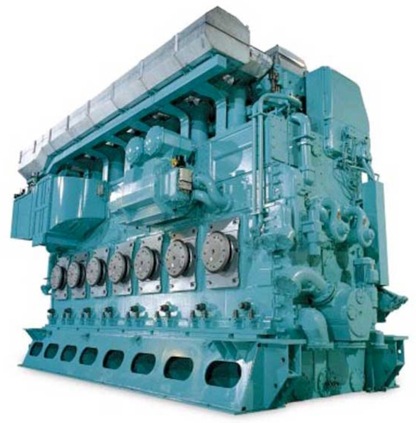
Royal Caribbean Mariner of the Seas has diesel-electric machinery, consisting of six Wärtsilä 12V46 diesel engines, with a total power of 75,600 kW. This is the same power plant configuration as the Carnival Dream Cruise Ship.
Power Generation Details
Class & Type: Voyager Class Cruise Ship
Tonnage: 138,00 GT
Length: x m (1,020 ft)
Beam: x m (157.50 ft)
Draft: 29 ft (8.8 m)
Decks: 15
Installed power: 6 × Wärtsilä 12V46 Diesel Engines (12,600 kW Each)
Total Power Generation: 75,600 kW
Propulsion: Diesel-Electric
Two ABB Azipods, one Fixipod and Four Bow Thrusters
Speed: 22 knots (41 km/h; 25 mph) (Service)
24 knots (44 km/h; 28 mph) (Max)
Capacity: 3,114 Passengers
Crew: 1,185
Fuel Consumption at Full Speed: 10,637 kg/h (2,871 gal/h)
Wärtsilä 12V46 Diesel Engine
D3 - Medium Electric Arc Furnace (EAF) for Steel Production - 175 MW - Equates to 35 Cisco Allen Data Centers Power Usage
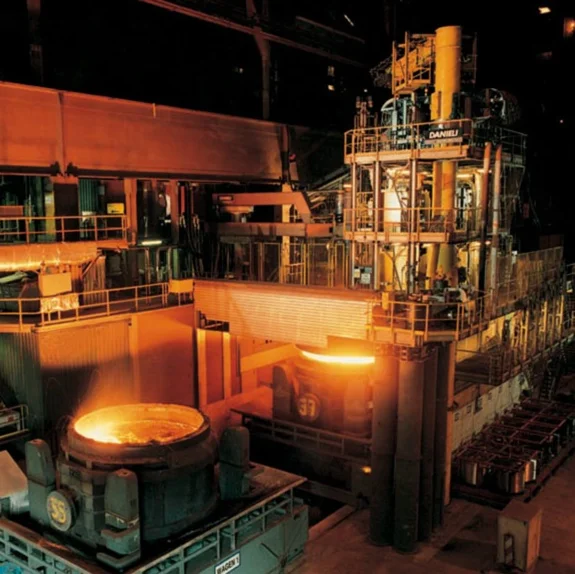
In the Electric Arc Furnace (EAF), recycled steel scrap is melted and converted into high quality steel by using high-power electric arcs. The main task of most modern EAFs is to convert the solid raw materials to liquid crude steel as fast as possible and then refine further in subsequent secondary steelmaking processes.
Small Electric Arc Furnace (EAF) - To 80 MVA
Medium Electric Arc Furnace (EAF) - To 140 MVA
Large Electric Arc Furnace (EAF) - To 320+ MVA
8x 32MVA Transformers/Rectifiers for 256 MVA total power (175 MW developed at the arc)
Medium sized Electric Arc Furnaces begin at 80 MVA and large at 140 MVA. The largest AC furnace in Turkey draws 250 MVA and Tokyo Steel has a Danieli-built continuous-charge 320 MVA DC furnace. It has 2 top electrodes, 4 bottom electrodes (2 per 'phase') and six transformers.
Video - Siemens Electric Arc Furnace Quantum - https://www.youtube.com/watch?v=m2bMpDsV5y0
Video - Electric Arc Furnace - Furnace Operation - https://www.youtube.com/watch?v=jtbEf0eC9cc
Video - Electric Arc Furnace - Close Up During Electric Arch - https://www.youtube.com/watch?v=YNEn26vfIpc
Basic Layout of Electric Arc Furnace Diagram

Income, Child Birth Cost, Child Annual Continued Cost and Education Costs - Summary
In late 2011, I read an article on CNN (http://www.cnn.com/2011/10/17/opinion/sachs-global-population/index.html?&hpt=hp_c2) titled "With 7 Billion on Earth, a Huge Task Before Us" and it got my mind turning. I went through a ton of data around the topics listed in the summary below and the results surprised me. I never imagined all of the associated costs with having children along with the education. What scares me more than anything is what they will be faced with once they graduate (At a Higher Education Level). Very fierce competition for positions that do not make good business sense. I found Section E - Great (Innovators) Examples (Education: Dropout of High School or College) very interesting. The net worth of the 7 tech individuals (That Either Dropped out of High School or College) is 119.40 Billon US Dollars combined. I believe that individuals that think outside of the box (true innovators) are the ones that will truly change the world. Once I get a free moment, I plan to update these figures for 2015.
Summary of Findings
A - United States Median Household Income ($50,000.00 "Mid" to $70,000.00 "High End"Actual Metrics) - Based Upon 1967 to 2010 US Census Bureau Data
B - United States Child Birth Cost
C - United States Child Raising Costs
D - United States Higher Education Costs
E - Great (Innovators) Examples (Education: Dropout of High School or College)
A - United States Median Household Income ($50,000.00 "Mid" to $70,000.00 "High End"Actual Metrics) - Based Upon 1967 to 2010 US Census Bureau Data
US Census Bureau Average (Age 25+) Advanced Degree Salary - $72,824.00
US Census Bureau Male (Age 25+) Advanced Degree Salary - $90,761.00
US Census Bureau Female (Age 25+) Advanced Degree Salary - $50,756.00
Dual Earning (Male/Female) (Advanced Degree) Salary: $141,517.00 (Note: United States Median Household Max Average Income: $111,582.00)
Dual Earning (Male/Male) (Advanced Degree) Salary: $181,522.00 (Note: United States Median Household Max Average Income: $111,582.00)
Dual Earning (Female/Female) (Advanced Degree) Salary: $101,512.00 (Note: United States Median Household Max Average Income: $111,582.00)
Income Statistics Based Upon Education


Persons/Households Income

B - United States Child Birth Cost
- An Uncomplicated Vaginal Birth: Nearly $7,000
- An ComplicatedVaginal Birth: Nearly $9,000
- An Uncomplicated C-Section: Over $12,000
- An Complicated C-Section: Nearly $16,000
Note: United States had the highest costs for the countries included.
C- United States Child Raising Costs
Child Raising Costs (From Birth to Age 18) - $226,920.00 (Not Including College)
Calculations - United States Median Household Income ($50,000.00 "Mid" to $70,000.00 "High End"Actual Metrics) - Based Upon 1967 to 2010 US Census Bureau Data
One Child: $226,920.00.00 - $12,606.67 per Year While Children are Under 18 United States Median Household Income ($50,000.00 "Mid" to $70,000.00 "High End"Actual Metrics)
Two Children: $453,840.12 - $25,213.34 per Year While Children are Under 18 United States Median Household Income ($50,000.00 "Mid" to $70,000.00 "High End"Actual Metrics)
Three Children: $680,760.00 - $37,820.00 per Year While Children are Under 18 United States Median Household Income ($50,000.00 "Mid" to $70,000.00 "High End"Actual Metrics)


D - United States Higher Education Costs
University of Kansas Example (Living on Campus)
Tuition and Fees: $8,733.00 (In-State); $21,538.00 (Out-of-State)
Books: $800.00
Room and Board: $7,070.00
Other Expenses: $4,226.00
Total Annual Cost: $20,829.00 (In-State) $33,634.00 (Out-of-State)
Total Bachelor's Degree (4 Years) Cost: $83,316.00 (In-State) $134,536.00 (Out-of-State)
Total Bachelor's Degree (6 Years) Cost: $124,974.00 (In-State) $201,804.00 (Out-of-State) - See Note A Below
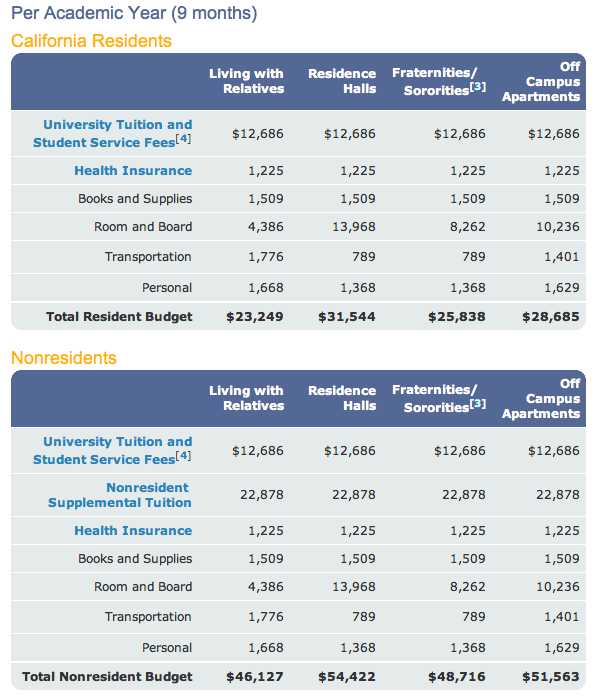
UCLA (University of California, Los Angeles) Example (Living on Campus)
Tuition and Fees: $12,686.00 (In-State); $35,756.00 (Out-of-State)
Health Insurance: $1,225.00
Books: $1,509.00
Room and Board: $13,968.00
Transportation: $789.00
Personal: $1,368.00
Total Annual Total Cost: $31,544.00 (In-State) $54,422.00 (Out-of-State)
Total Bachelor's Degree (4 Years) Cost: $126,176.00 (In-State) $217,688.00 (Out-of-State)
Total Bachelor's Degree (6 Years) Cost: $189,264.00 (In-State) $326,532.00 (Out-of-State) - See Note A Below
Note: The average student now takes six years or more to earn a bachelor’s degree in the United States. Coupled with the recent slide of the U.S. from first to twelfth place in the numbers of adults holding degrees.
E - Great (Innovators) Examples (Education: Dropout of High School or College)
Bill Gates (Microsoft)
Net Worth: 59 Billion (As of Sep 2011)
Education: Dropout, Harvard University
Mark Zuckerberg (Facebook)
Net Worth: 17.5 Billion (As of Sep 2011)
Education: Dropout, Harvard University
Michael Dell (Dell Computers)
Net Worth: 15 Billion (As of Sep 2011)
Education: Dropout, University of Texas Austin
Paul Allen (Microsoft)
Net Worth: 13.2 Billion (As of Sep 2011)
Education: Dropout, Washington State University
Steve Jobs (Apple)
Net Worth: 7 Billion (As of Sep 2011)
Education: Dropout, Reed College
Sir Richard Branson
Net Worth: 4.2 Billion (As of March 2011)
Education: Dropout, High School
Dustin Moskovitz (Facebook)
Net Worth: 3.5 Billion (As of Sep 2011)
Education: Dropout, Harvard University
FLIR ONE Thermal Imager
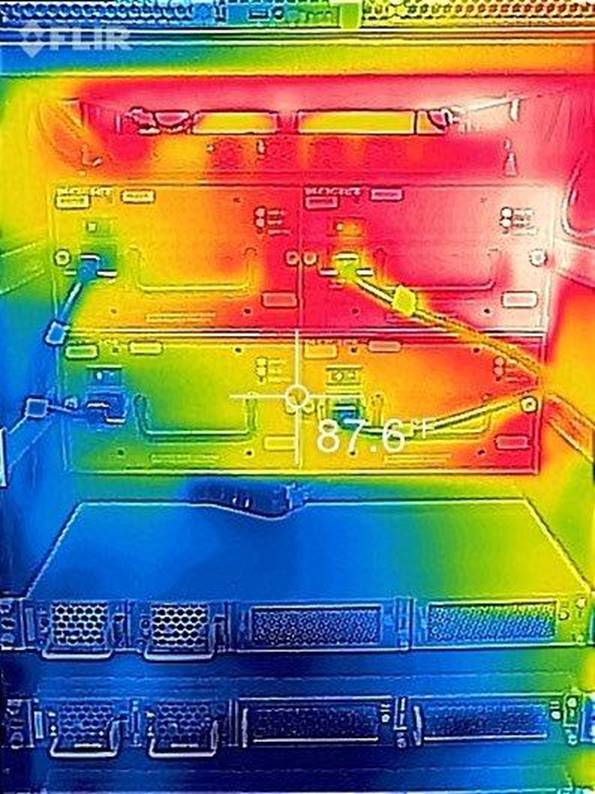
Over the years, one of my areas of focus has been in reference to thermal imaging. The thermal imaging cameras that I utilize detect radiation in the infrared range of the electromagnetic spectrum (roughly 9,000–14,000 nanometers or 9–14 µm) and produce images of that radiation, called thermograms.
A couple of months ago, I purchased the new FLIR ONE Thermal Imager that is compatible with the iPhone 5/5s. I have been carrying the FLIR ONE Thermal Imager with me and shot the photos (Below) within a Lab Data Center. A subset of these features (at a basic level) could be used for proper airflow verification and electrical load verification upon startup. I have been very impressed with the capabilities of this $350 Thermal Imager.
Overview
FLIR ONE is a lightweight accessory that in combination with its free app transforms your iPhone 5 or 5s into a powerful thermal imager. When you attach it to your iPhone and access the app, it displays live infrared imagery so you can see the world from a thermal perspective. FLIR ONE works by detecting heat energy, giving you the ability to "see" and measure minute temperature variances.
FLIR ONE Thermal Imager - $349.95
Main Page: http://flir.com/flirone/
Apple Store: http://store.apple.com/us/product/HG362LL/A/flir-one-thermal-imager
Note: The image quality in the embedded photos (Below) are substantially reduced for faster web page load times.




Nikola Tesla’s Room - 3327 at The New Yorker Hotel
Recently, I was fortunate enough to stay at The New Yorker Hotel (Manhattan, NY) (http://www.newyorkerhotel.com) in room 3327. Room 3327 at The New Yorker Hotel was where Nikola Tesla (http://en.wikipedia.org/wiki/Nikola_Tesla) lived from 1933 through 1943 and where he passed away on January 7, 1943. Room 3327 was his bedroom and room 3328 was his study. The New Yorker Hotel has been beautifully restored and the staff is absolutely phenomenal. They were kind enough the give me the Nikola Tesla - The New Yorker Hotel Handout - September 2014 (Download Link Below). As an engineer, I have always greatly admired Nikola Tesla along with his great innovations.
One evening, I had a bit of free time to walk over to Bryant Park (http://en.wikipedia.org/wiki/Bryant_Park) where Mr. Tesla spent time everyday feeding pigeons. Bryant Park is a beautiful park with great energy. I can see why Mr. Tesla found it to be so peaceful.
Nikola Tesla - The New Yorker Hotel Handout - September 2014 PDF (Click to Download) - 18.1 MB

Nikola Tesla’s Room 3327 at The New Yorker Hotel - September 2014

Nikola Tesla’s Room 3327 and 3328 at The New Yorker Hotel - 1941

Nikola Tesla’s Room 3327 at The New Yorker Hotel - January 1943 (Left) and September 2014 (Right)

Nikola Tesla’s Room 3327 at The New Yorker Hotel - January 1943 (Left) and September 2014 (Right)

Nicola Tesla with King Peter II of Yugoslavia in Room 3327 - June 1942 (Top) and September 2014 (Bottom)

Bryant Park - September 2014


Upcoming Tech Conference - WESTEC 2015
Upcoming Tech Conference - WESTEC 2015
http://www.westeconline.com
September 15 - 17, 2015
Los Angeles Convention Center
Los Angeles, CA
The West Coast’s definitive manufacturing event, returns to the Los Angeles Convention Center September 15 – 17, 2015. Only WESTEC brings you the very latest technologies – from software, cutting tools to multi-tasking machines – all from top international equipment manufacturers. Learn from fellow attendees how WESTEC can help your company cut costs, enhance quality, or earn a place on an OEM’s preferred supplier list.
WESTEC is where collaboration starts – a place to network, form relationships, build partnerships, and solve your firm’s most pressing problems.

Upcoming Tech Conference - Sensor Expo & Conference
Upcoming Tech Conference - Sensor Expo & Conference
http://www.sensorsmag.com/sensors-expo
June 9-11, 2015
Long Beach Convention Center
Long Beach, CA
Since 1986, Sensors Expo has been drawing an audience of top engineers and engineering professionals. With the largest showcase of sensing technologies, Sensors brings you the solutions you need now, and shows you what's driving the future of sensing technology.
Sensors is where thousands of engineers and engineering professionals can see the latest sensing technologies and solutions, identify new ways to improve products and expand their functionalities using sensors, learn about "hot" and cutting-edge technology areas: Energy Harvesting, Internet of Things, MEMs, Wireless, Energy Harvesting, network with colleagues and more!

Upcoming Tech Conference - Space Tech Expo
Upcoming Tech Conference - Space Tech Expo
http://www.spacetechexpo.com
May 19-21, 2015
Long Beach Convention Center
Long Beach, CA
Taking place in Long Beach, the Space Tech Expo exhibition and conference brings together global decision-makers involved in the design, build and testing of spacecraft, satellite, launch vehicle and space-related technologies. Leading the West Coast space and satellite industry, Space Tech Expo is where end-users connect with solution providers; a platform for industry leaders, specifiers and buyers to meet manufacturers and the supply chain for civil and commercial space.

Upcoming Tech Conference - Rapid
Upcoming Tech Conference - Rapid
http://rapid3devent.com
May 18-21, 2015
Long Beach Convention Center
Long Beach, CA
For 25 years, the RAPID Conference has been the industry-leading forum for the presentation and discussion of the latest developments, trends and techniques specific to additive manufacturing, rapid technologies, 3D printing and 3D scanning. You’ll hear and meet leaders and thinkers that are applying the technologies in manufacturing for transportation, medical, dental, casting, and more.

Upcoming Tech Conference - Next Innovation Summit
Upcoming Tech Conference - Next Innovation Summit
http://www.nextinnovationsummit.com
March 4-5, 2015
Anaheim Hilton
Anaheim, CA
As we reach beyond our strong base of science, we will maintain our objective presentation of cutting-edge research that allows participant companies to better chart their future.
If you are a Nutracon alumni, NEXT Innovation Summit is still the Nutracon that you garnered actionable insights from. The first day is designed to inspire and set the stage for out of the box and lateral thinking to pace product and company developments in years to come. The second day of the conference will dig in to focus on the tactical issues and applications of these big ideas through 3 strong tracks.
For newcomers, NEXT Innovation Summit is now bigger than just formulation. It’s the discussion and intelligence necessary to understand where the natural products industry is headed, and a cooperative forum for finding success in that future.

Upcoming Tech Conference - Global Innovation Summit + Week
Upcoming Tech Conference - Global Innovation Summit + Week
http://www.innosummit.com
February 17-19, 2015
Silicon Valley, CA
Along with over 1,000 of your fellow ecosystem builders from over 50 countries at over 20 events, we will connect, learn, and create together. It all happens on February 16-20, 2015 in Silicon Valley. The Global Innovation Summit is the centerpiece of Global Innovation Week, which features multiple events and activities throughout the region.

Upcoming Tech Conference - SOLIDWORKS World 2015
Upcoming Tech Conference - SOLIDWORKS World 2015
http://www.solidworks.com/sww/
February 8-11, 2015
Phoenix Convention Center
Phoenix, AZ
Learn how you can work faster and be more efficient. Choose from over 200 technical breakout sessions led by SOLIDWORKS users and industry experts.

Upcoming Tech Conference - CES
Upcoming Tech Conference - CES
http://www.cesweb.org
January 6-9, 2015
Las Vegas, NV
The International CES (Consumer Electronics Show) is the world’s gathering place for all who thrive on the business of consumer technologies. It's where business gets done: on the show floor, in and around our conference program, in impromptu connections and in planned meetings and special events.
YouTube Video - Power of CES
https://www.youtube.com/watch?v=FYBItAntTTI

Upcoming Tech Conference - Rockwell Automation Fair
Upcoming Tech Conference - Rockwell Automation Fair
http://www.rockwellautomation.com/rockwellautomation/events/automation-fair/overview.page
November 19-20, 2014
Anaheim Convention Center
Anaheim, CA
Attend Automation Fair to see how the Connected Enterprise can help you achieve faster time to market, optimize your assets, lower your total cost of ownership and improve enterprise risk.

Upcoming Tech Conference - Design 2 Part Show
Upcoming Tech Conference - Design 2 Part Show
http://www.d2p.com/ShowInfo
October 15-16, 2014
Long Beach Convention Center
Long Beach, CA
For over 39 years, engineers and product manufacturers have relied on Design-2-Part Shows to find the best custom components, parts and contract manufacturing services. Each show features hundreds of job shops and American contract manufacturing suppliers exhibiting their skills in design, prototypes, production runs, value added services, assemblies, electronics, and much more.
YouTube Video - Long Beach CA Design-2-Part Show 2014
https://www.youtube.com/watch?v=ESgvRCIbcuc
Design 2 Part Show (http://www.d2p.com) will also be in the locations below as well.
